

Please fill out the form below to request a quote or to request more information about us. please be as detailed as possible in your message, and we will get back to you as soon as possible with a response. we're ready to start working on your new project, contact us now to get started.
Choosing a Trustworthy mPOS Partner: The Pillars of Reliability, Security, and Strategic Growth
2026-04-22
SZFP
40
Selecting a mobile Point of Sale (mPOS) system transcends a simple hardware purchase; it is a strategic decision to partner with a manufacturer whose reliability and vision will underpin your business operations. A trustworthy manufacturer is distinguished by foundational qualities that ensure long-term viability, security, and growth. This article outlines the core attributes that separate leading mPOS partners from mere vendors.
Five Pillars of a Trustworthy mPOS Manufacturer
A credible mPOS manufacturer is built upon five interdependent pillars that demonstrate a commitment beyond transactional hardware.
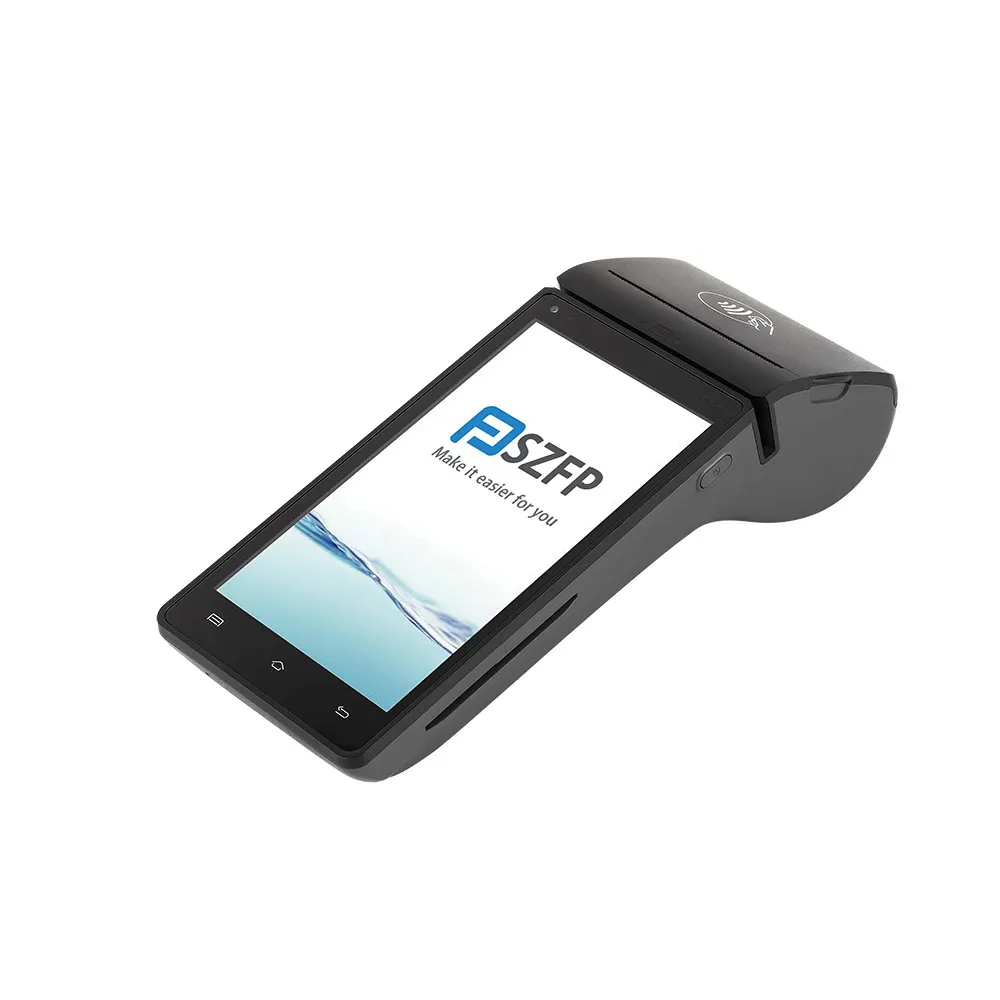
Purpose-Built Hardware Durability: The physical terminal must be engineered for resilience, capable of withstanding the rigors of daily use across diverse environments. This investment in robust design and materials directly protects your capital and ensures uninterrupted service.
Genuine Software Commitment: Trust is sustained through a living software platform. This requires a transparent development roadmap, rigorous and timely security updates, and robust tools for integration, proving the manufacturer is invested in your business's evolution.
Expert-Led Implementation & Support: Promised reliability becomes operational reality through a human layer of expertise. Seamless deployment, proactive monitoring, and dedicated, knowledgeable support are critical for transforming technology into continuous business continuity.
Validated Ecosystem Credibility: External validation matters. Strategic industry partnerships, a proven portfolio of successful client deployments, and adherence to audited security compliance standards (e.g., PCI DSS) offer tangible proof of scalability and reliability.
Strategic Growth Partnership: The ultimate test is whether the manufacturer empowers your future. This is evidenced by support for data portability, frictionless system scalability, and an open, future-proof architecture that allows your business to adapt and expand with confidence.
Architecting Unshakeable Security: A Proactive Framework
For leading manufacturers, security is not a feature but a foundational philosophy, integrated proactively at every layer of the system.
This commitment originates with a security-by-design culture, embedding practices like threat modeling, secure coding standards, and automated vulnerability scanning directly into the development lifecycle. Security then extends into operation via automated, frictionless patch management, ensuring critical updates are deployed consistently across the entire device ecosystem without burdening the merchant.
To build a trusted partnership, manufacturers provide transparent compliance dashboards, giving merchants real-time visibility into device health and security status, thereby converting operational data into actionable risk intelligence. Furthermore, systems are architected to generate cryptographically-secured audit trails, creating immutable records for forensic analysis and compliance needs while carefully scoping data collection.
Finally, by leveraging aggregated, anonymized threat intelligence from their global network, these leaders enable a collective defense mechanism, capable of detecting and mitigating novel attack patterns in real-time, all while upholding stringent data privacy principles.
The Engine of Innovation: Strategic R&D in mPOS Hardware
Innovation in mPOS hardware is driven by deep, strategic research and development with an unwavering focus on reliability. This pursuit extends beyond physical durability to encompass seamless ecosystem convergence. Advanced R&D ensures hardware acts as invisible connective tissue through ultra-stable communication protocols and modular designs that integrate effortlessly with peripherals and software.
Strategic R&D aligns with evolving market demands, increasingly incorporating circular design principles for sustainability and hardening security at the silicon level with dedicated secure elements. This comprehensive engineering effort transforms the hardware from a simple transaction terminal into a silent, trustworthy platform that safeguards revenue and enables sophisticated software applications, thereby creating a demonstrable trust premium in the marketplace.
Evaluating True Cost: Beyond Price to Ecosystem Value
A prudent evaluation of a mobile POS system must analyze the Total Cost of Ownership (TCO), which extends far beyond the initial purchase price to encompass long-term value and integration.
A truly integrated platform, engineered from the hardware up, reduces operational burden through inherent reliability and seamless connectivity, minimizing costly downtime, replacements, and IT labor. In such an ecosystem, security is a foundational element, not a costly add-on, fundamentally lowering business risk by protecting the entire workflow.
This integration must be accessible and open, facilitated by frictionless onboarding and well-documented APIs that empower businesses rather than create vendor lock-in. The highest value is realized when the platform functions as a strategic data hub, transforming transactional information into actionable business intelligence. Ultimately, the system must demonstrate resilient scalability, performing reliably under stress and evolving gracefully with future technological and business demands, thereby securing its long-term strategic viability.
The Critical Role of Manufacturer Support and Strategic Service
Manufacturer support constitutes the critical human foundation of trust, evolving far beyond basic break-fix repair to become a strategic service partnership.
True reliability is engineered through proactive, intelligence-driven monitoring where safeguarding data integrity and ensuring compliance are shared priorities. This relationship actively enables business growth, providing integrated tools for customer engagement and omnichannel commerce.
Crucially, this support structure must be architected for universal accessibility, delivering enterprise-grade security and intuitive operational insights to merchants of all scales. It also requires a human-centered approach to user adoption and confidence, while the manufacturer assumes the role of ecosystem steward, collaboratively orchestrating stability across the entire technology stack to protect the merchant's complete operation.
Choosing an mPOS Partner: A Framework for Strategic Selection
Selecting an mPOS partner requires a holistic evaluation focused on future-proofing your business.
Begin by scrutinizing the technical foundation: assess hardware stability, embedded security protocols, and the strategic direction of the manufacturer's R&D investments. The deployment process must guarantee seamless integration with your existing systems, supported by contextual, expert assistance to minimize disruption.
Critically, a true partnership is defined by long-term strategic alignment. Demand transparency in pricing, a shared vision on innovation roadmaps, and a proven ability to scale alongside your growth. Diligently scrutinize potential hidden risks such as data lock-in or fragile ecosystem dependencies, seeking verifiable co-management practices like formal API lifecycle policies and auditable security controls.
Ultimately, the partner's governance model and economic incentives should unequivocally demonstrate a commitment to mutual success, prioritizing your operational resilience and data sovereignty within a collaboratively managed technological ecosystem.
FAQs Related to Trustworthy mPOS Manufacturers and Strategic Partner Selection
What are the five core pillars that distinguish a trustworthy mPOS manufacturer from a simple vendor?
A credible mPOS manufacturer is built on five interdependent pillars: 1) Purpose-Built Hardware Durability for resilience in daily use; 2) Genuine Software Commitment through transparent development roadmaps and security updates; 3) Expert-Led Implementation & Support for seamless deployment and business continuity; 4) Validated Ecosystem Credibility via industry partnerships and compliance standards like PCI DSS; and 5) Strategic Growth Partnership, evidenced by support for data portability, scalability, and future-proof architecture.How do leading mPOS manufacturers approach security beyond basic compliance?
Leading manufacturers treat security as a foundational philosophy, not just a feature. This involves a proactive framework including: a security-by-design culture embedded in development; automated, frictionless patch management; transparent compliance dashboards for real-time device health visibility; cryptographically-secured audit trails for forensics; and leveraging aggregated, anonymized threat intelligence from their global network for real-time detection and mitigation of novel attacks, all while upholding stringent data privacy.What should businesses evaluate beyond the initial price when considering the Total Cost of Ownership (TCO) for an mPOS system?
A prudent TCO analysis must look beyond the purchase price to assess long-term ecosystem value. Key factors include: the operational burden reduction from an integrated, reliable platform; security as a foundational element that lowers business risk; accessible, open integration via APIs to avoid vendor lock-in; the platform's capability as a strategic data hub for business intelligence; and resilient scalability that ensures the system performs under stress and evolves with future technological and business demands.What is the role of strategic R&D in mPOS hardware innovation, and what key areas does it focus on?
Strategic R&D in mPOS hardware is driven by a focus on reliability and innovation. It extends beyond physical durability to ensure seamless ecosystem convergence through stable communication protocols and modular designs. It aligns with market demands by incorporating circular design principles for sustainability and hardening security at the silicon level with dedicated secure elements. This comprehensive effort transforms hardware into a silent, trustworthy platform that safeguards revenue and enables sophisticated applications, creating a demonstrable trust premium.What critical elements should a business scrutinize during the strategic selection of an mPOS partner to ensure future-proofing?
Selection requires a holistic evaluation framework. Begin by assessing the technical foundation: hardware stability, embedded security, and R&D direction. Evaluate the deployment process for seamless integration with minimal disruption. Most critically, demand long-term strategic alignment: transparency in pricing, shared innovation roadmaps, and proven scalability. Diligently scrutinize hidden risks like data lock-in or fragile dependencies, seeking verifiable co-management practices (e.g., API lifecycle policies, auditable security controls). The partner's governance should demonstrate a commitment to mutual success, prioritizing your operational resilience and data sovereignty.
Table of Contents
GET IN TOUCH WITH Us
The global lottery POS industry is experiencing significant digital transformation in 2026. Traditional single-function POS terminals with fixed systems face major limitations, including poor compatibility and difficult updates. These drawbacks can no longer meet the demands of modern cloud-based lottery systems, real-time data synchronization, and high-frequency ticketing scenarios. For lottery operators worldwide, all-in-one, compatible, and highly stable POS hardware has become the standard for sustainable business operation and scalable deployment.
One of the most notable industry trends is the full transition from standalone printing devices to integrated smart POS terminals. Modern lottery businesses require good software compatibility, multi-network adaptability, and modular expandability to comply with updated industry regulations and evolving retail lottery business models.
We are a professional pos terminal manufacturer and high-tech company registered in Shenzhen and Hong Kong, China, focusing on EFT-POS terminal R&D.
Tel: 86-755-86276295
Email: sales@szfptech.com
Address: Room 213, Building 1, Mingliang Science Park, 88 Zhuguang North Road, Taoyuan Street, Shenzhen, Guangdong, China
Copyright © 2026 SZFP | Privacy Policy Sitemap